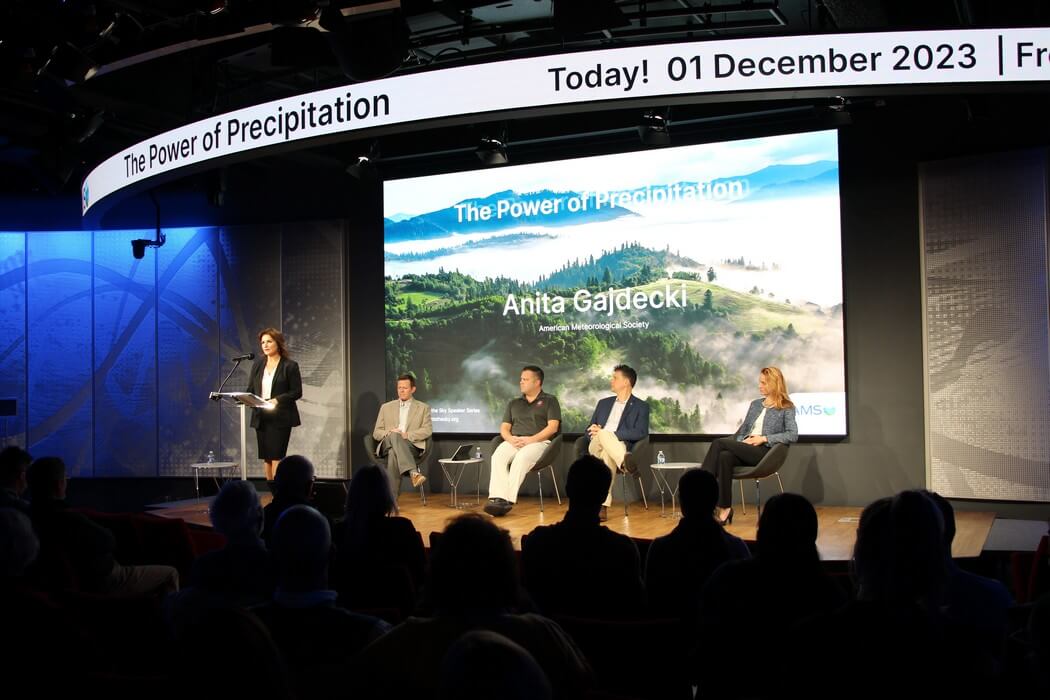
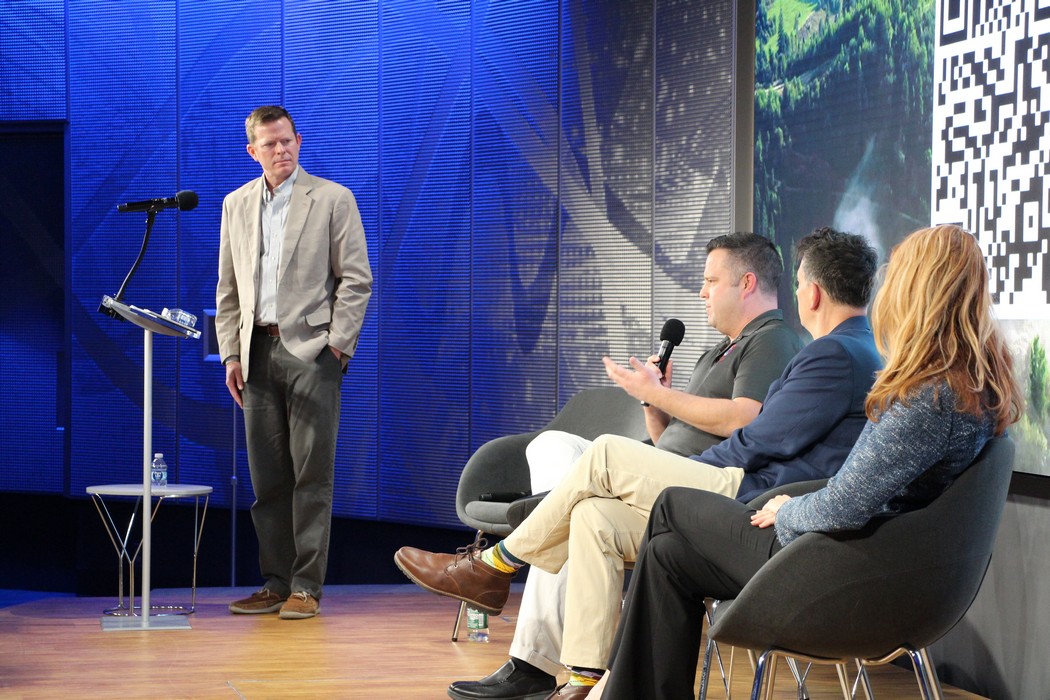
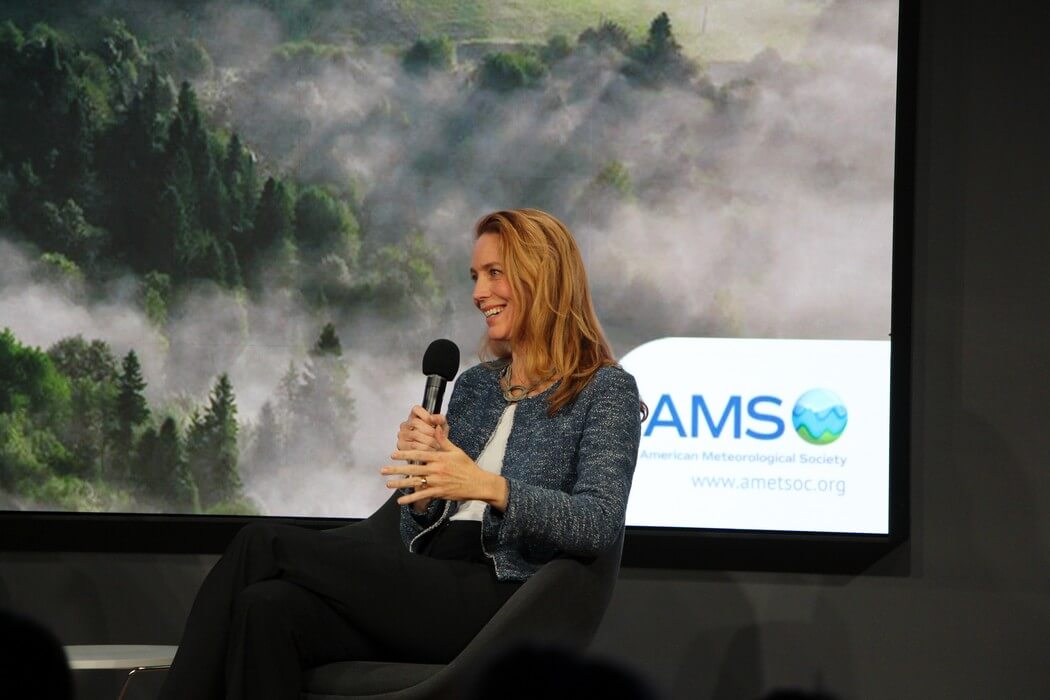
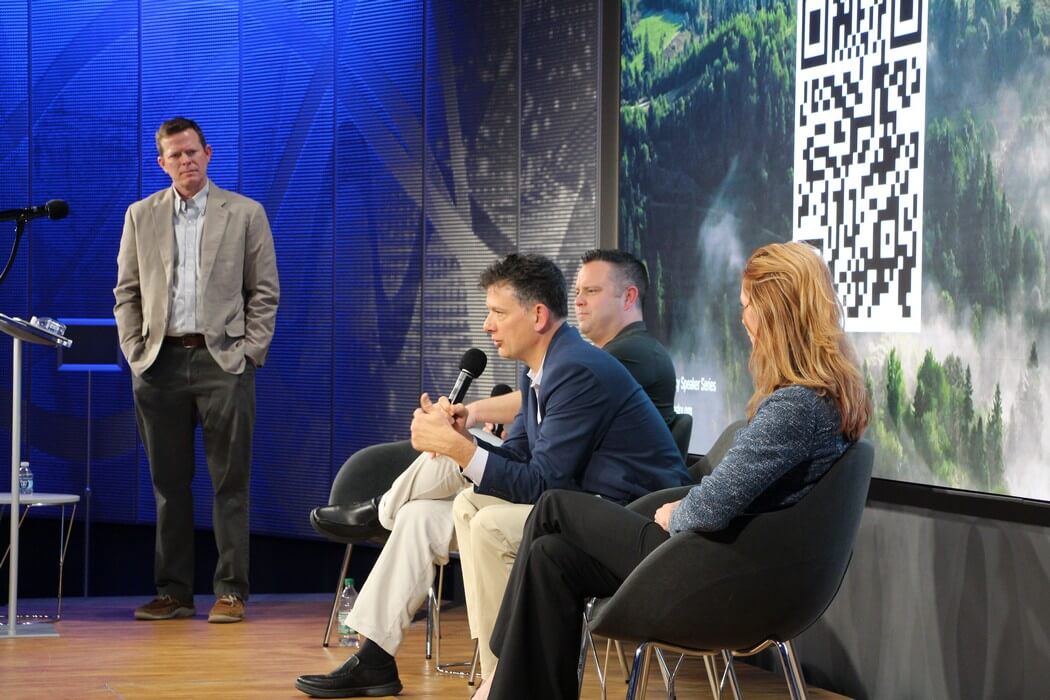
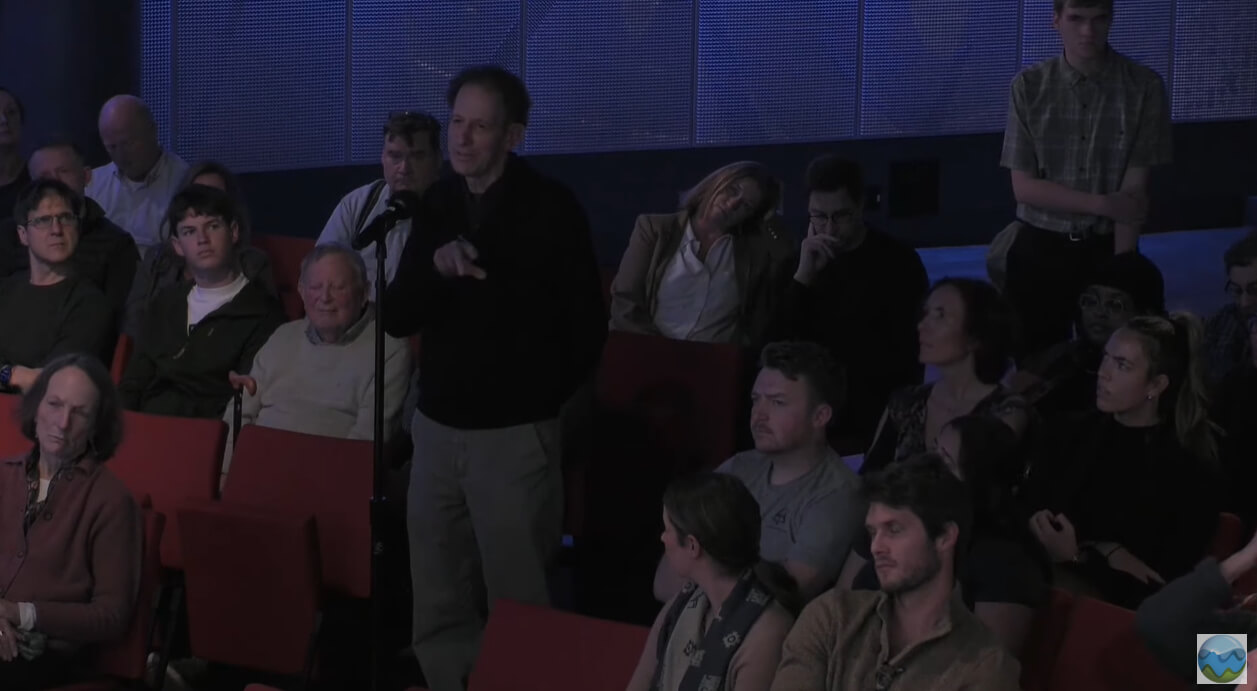
The third annual American Meteorological Society’s Eye Towards the Sky speaker series brought together leading voices in climate and weather science to share current research, firsthand accounts, and data-driven insights about the role of water in Earth’s climate systems. Held at Boston’s WBUR CitySpace and streamed online, the event focused on how water, in all its forms, is central to understanding the patterns, risks, and future of a changing climate.
A Mission Rooted in Science and Service
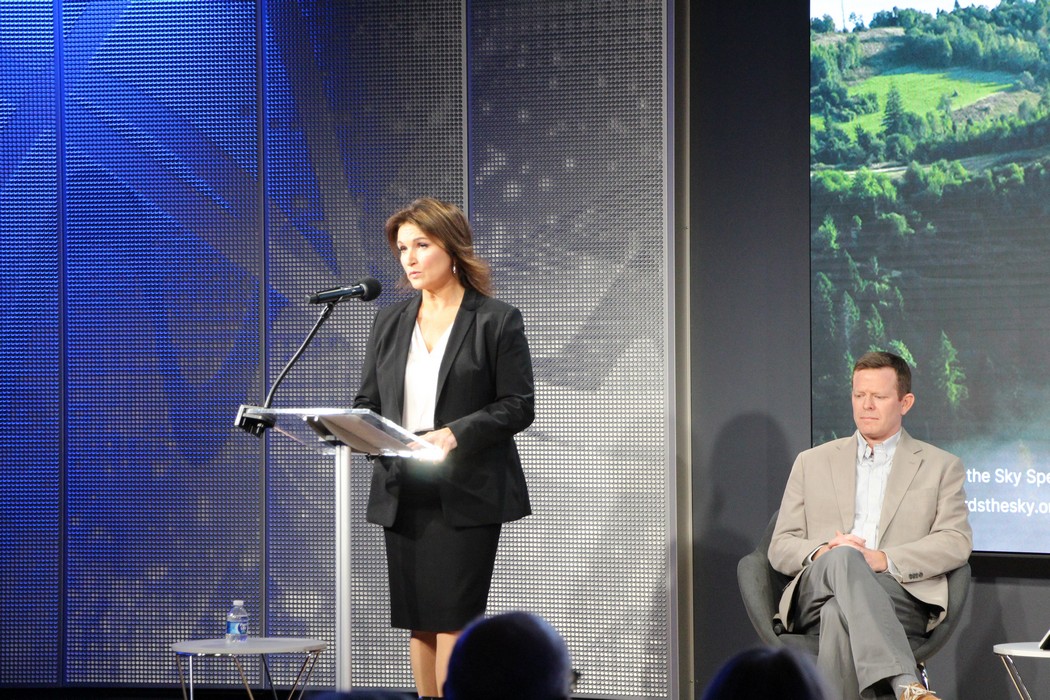
The founder of the speaker series, Anita Gajdecki began the evening by emphasizing the importance of accessible science communication. “Although we won’t sugarcoat the facts, we present them to you with an underlying sense of optimism and hope,” she said. The Eye Towards the Sky series is designed to help non-scientists understand how atmospheric and climate science impacts everyday life.
Ms Gajdecki stressed the need for public engagement: “We want you to walk away tonight knowing more about how water powers our weather – and how we’re all in this together.”
The Blizzard That Shook Buffalo
Chief Meteorologist Michael Fries provided an in-depth breakdown of the December 2022 blizzard in Buffalo, New York. The storm delivered 37 hours of continuous blizzard conditions, including sustained winds of nearly 80 mph and snowfall exceeding 50 inches in some locations. “We issued the blizzard warnings in advance and called it a once-in-a-generation storm,” he explained. “That language really helped emergency managers and the media understand what we were facing.”
Mr Fries outlined how lake-effect snow, warm lake surface temperatures, and wind direction intensified the event. While snowfall is increasing in Buffalo, he noted a paradox:
“There’s a marked increase in snowfall, but a marked decrease in the number of days with snow cover.”
This reflects broader climate patterns where precipitation intensity increases but snowpack duration declines.
Climate Change: Amplifying the Extremes
Dr Gabriel Vecchi of Princeton University connected local weather events to broader climate trends. Rising global temperatures, he explained, are leading to more extreme precipitation and heat events.
“We’re not waiting for global warming. We’re living with it,” Dr Vecchi stated. “Every one of the last 10 years has been among the 10 warmest in recorded history.”
As the atmosphere warms, it holds more moisture, amplifying both rainfall and drought. Dr Vecchi noted that even as greenhouse gases warm the planet, water vapor – a byproduct of that warming – becomes a powerful climate force in its own right. He concluded by noting the importance of near-term decisions: “Every degree of warming we prevent matters. And what we do in the next five to seven years could determine if we have the chance to cool the planet by mid-century.”
Oceans: The Planet’s Heat and Water Engine
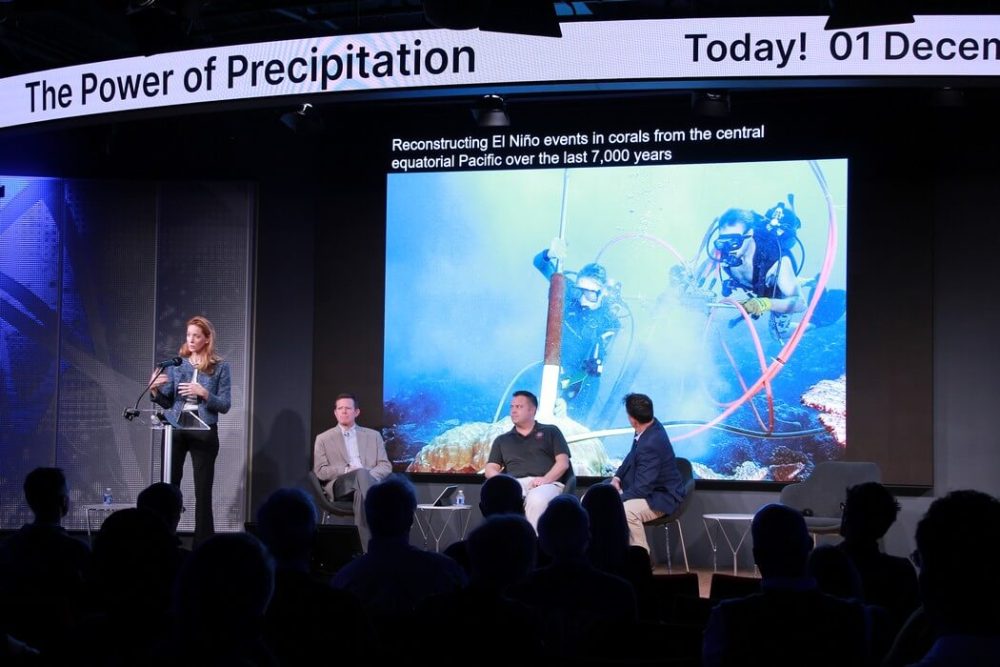
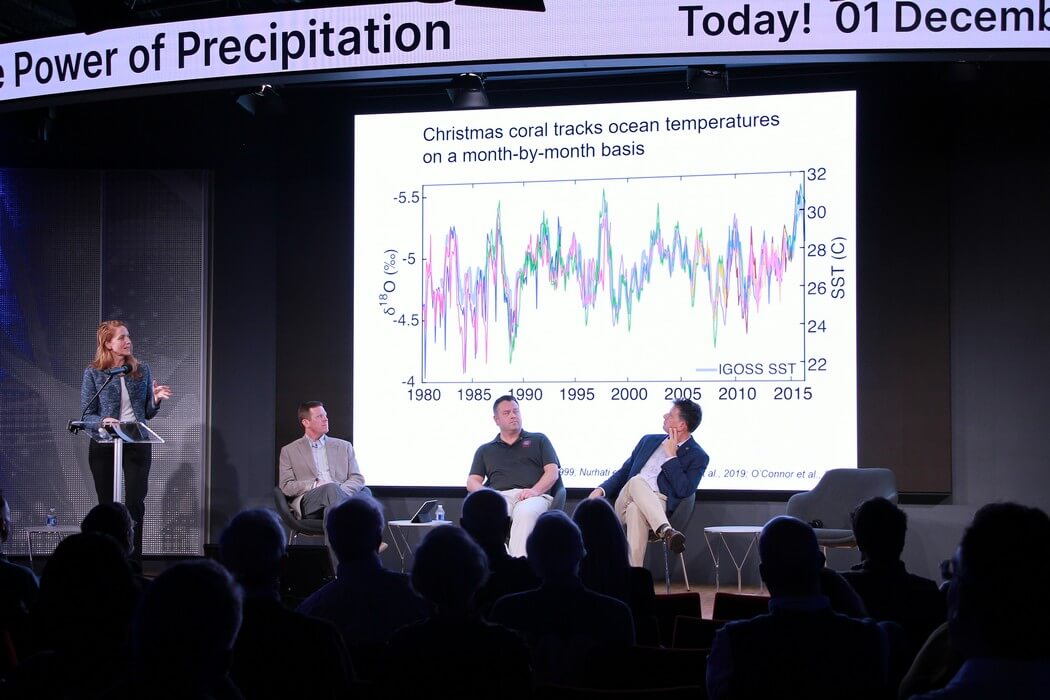
Dr Kim Cobb of Brown University addressed how ocean systems absorb and redistribute heat. “The oceans are a giant heat sponge,” she said. Over 90% of the excess heat from greenhouse gas emissions is stored in the oceans, influencing storm systems, precipitation, and long-term temperature trends.
Dr Cobb’s research using coral records shows how El Niño events are changing in frequency and intensity.
“We are seeing record-breaking sea surface temperatures,” she noted. “That’s fueling stronger storms and shifting weather patterns, even here in New England.”
She highlighted the importance of climate literacy and local action. “Talking about climate change is itself an act of change,” Dr Cobb said, emphasizing the role of public dialogue and informed decision-making.
From Knowledge to Action
Moderator Dr Matt Sitkowski of The Weather Channel summed up the event’s theme: scientific understanding enables resilience.
“Knowledge is power,” he said. “And the more you know, the better equipped you are to prepare, adapt, and help others.”
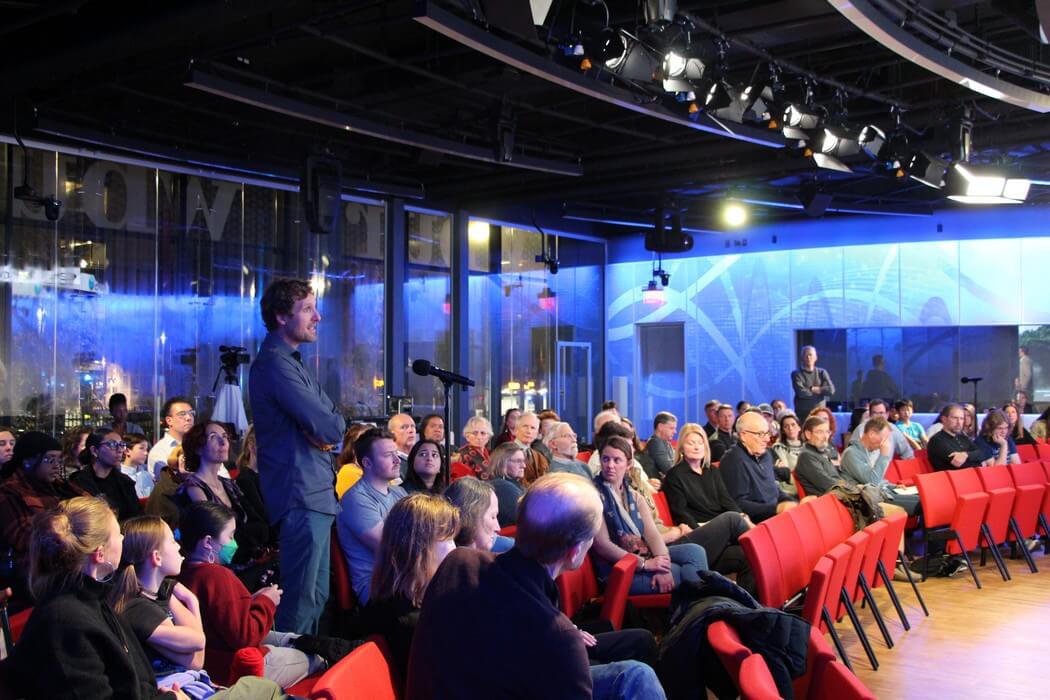
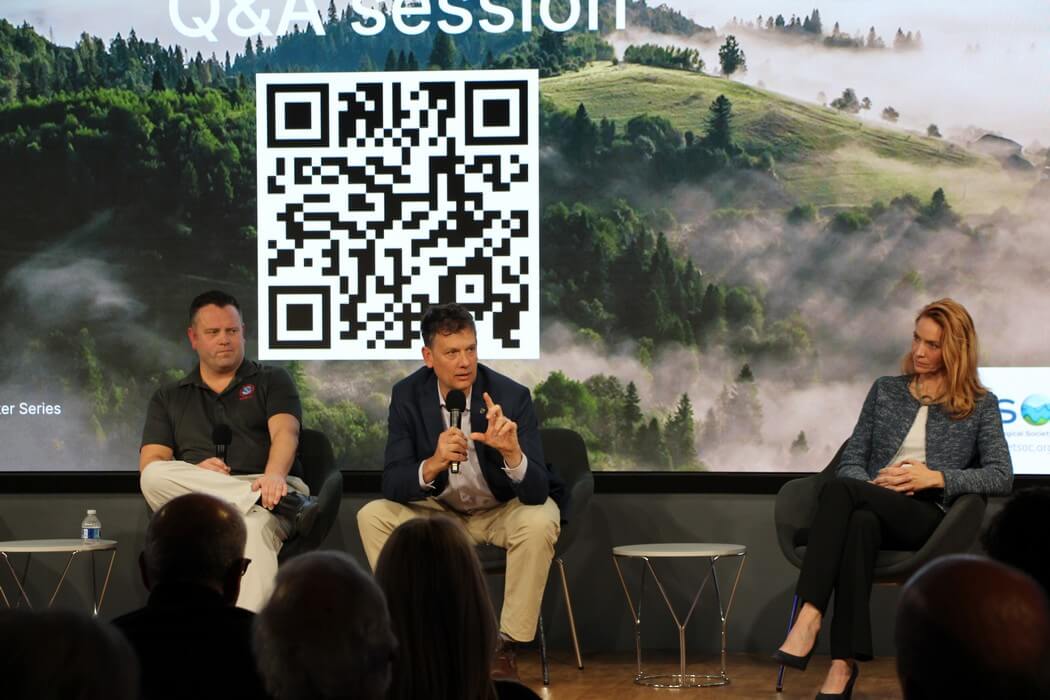
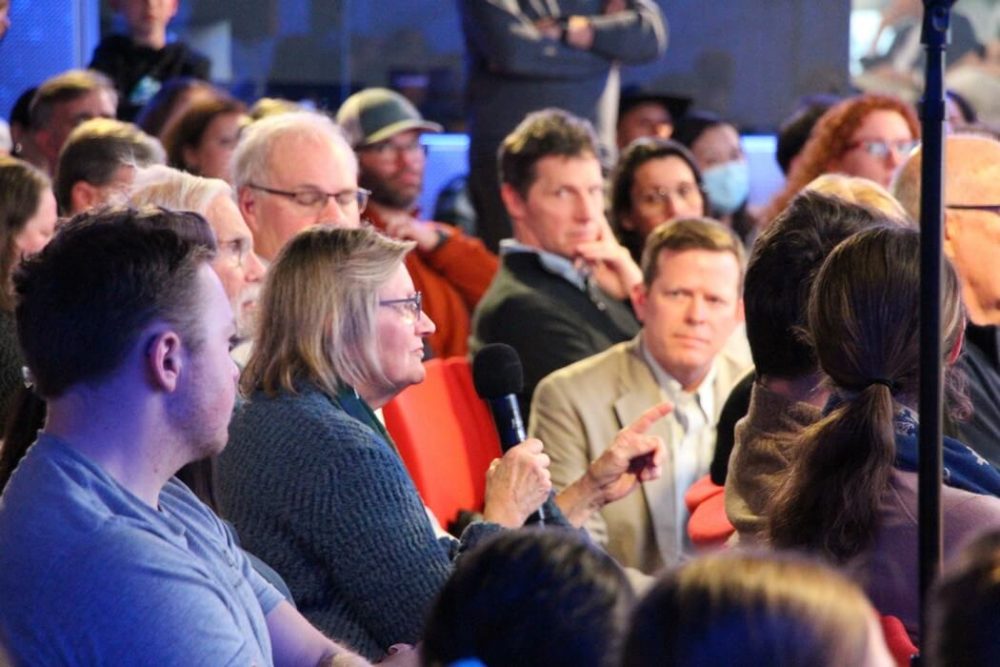
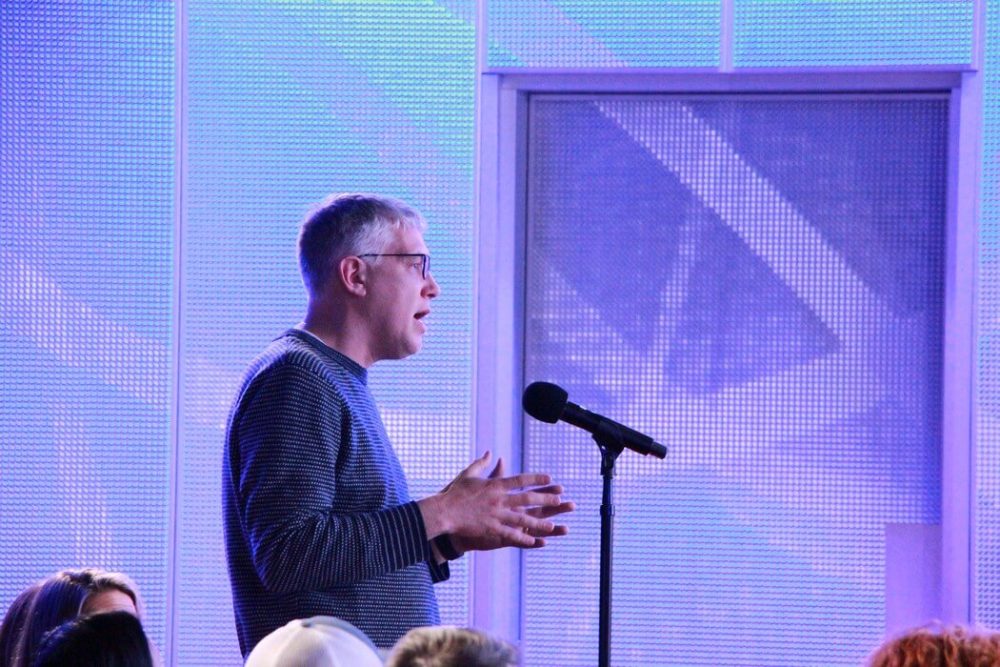
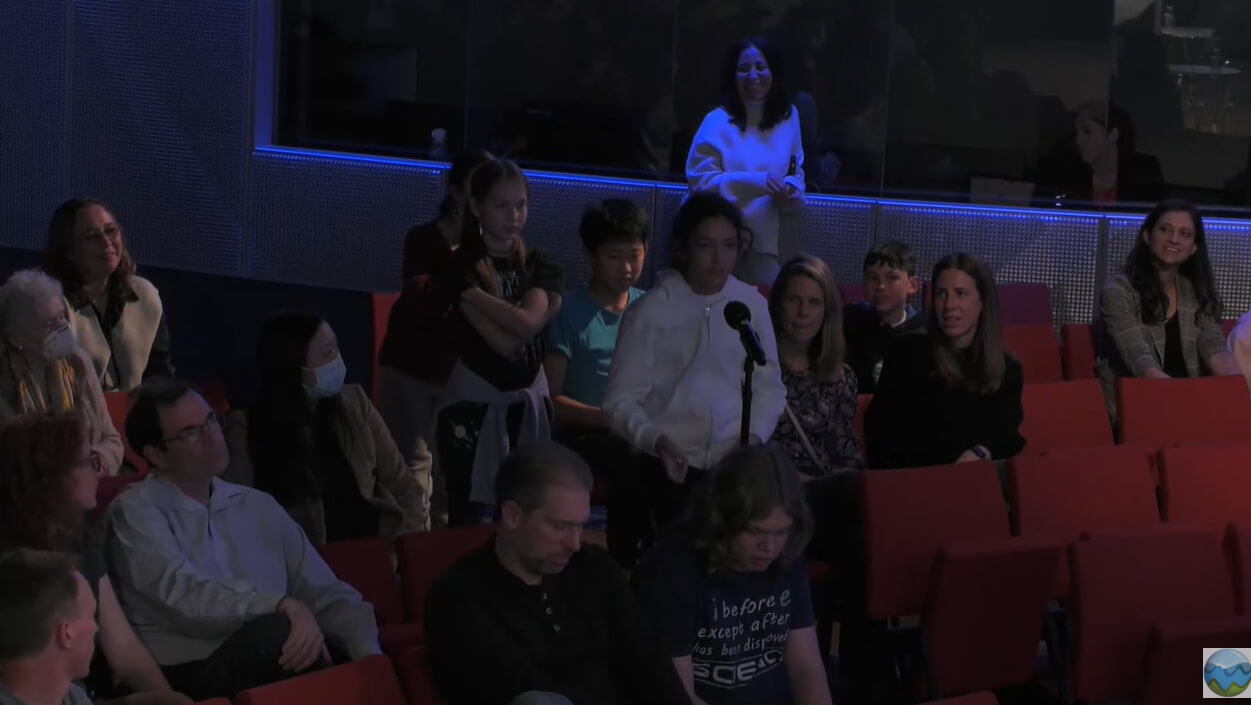
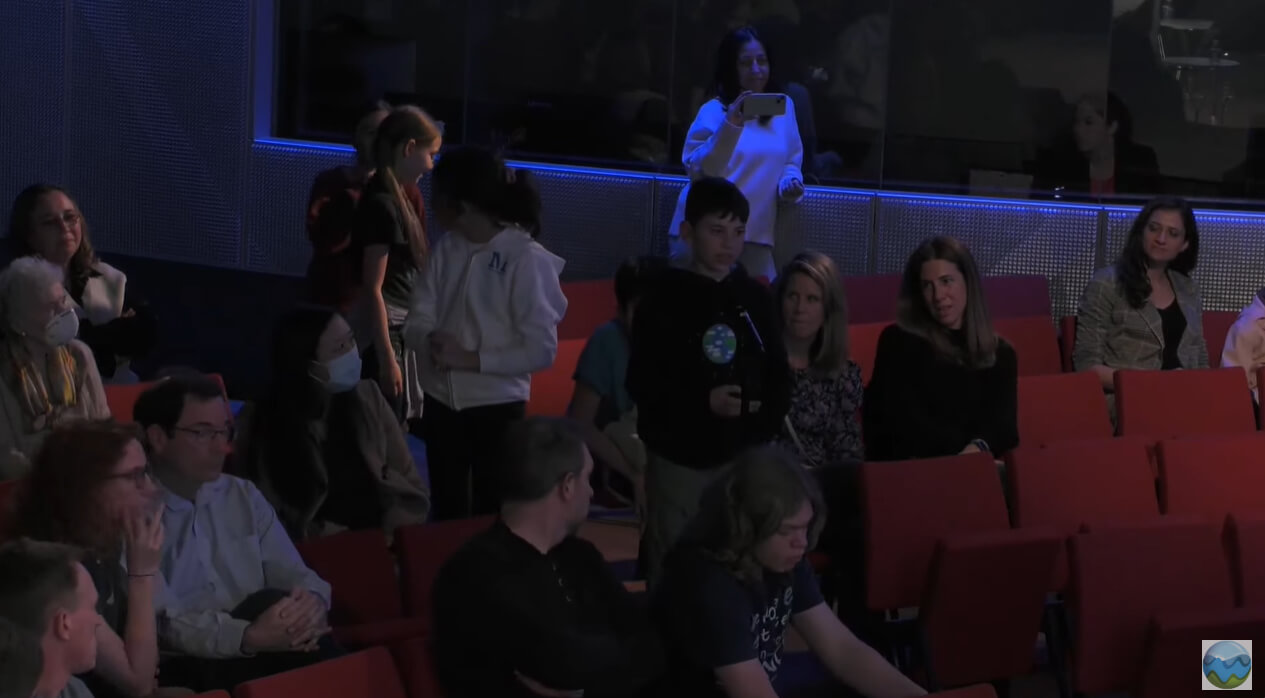
From new forecasting technologies to local climate adaptation strategies, the event emphasized the value of credible, actionable science. As the evening closed with a community Q&A, attendees were reminded that weather is not just daily conversation – it is a key signal in the climate story unfolding around us.
The AMS speaker series continues to provide a platform for evidence-based discussions that make the science behind climate change both visible and valuable to the broader public.